



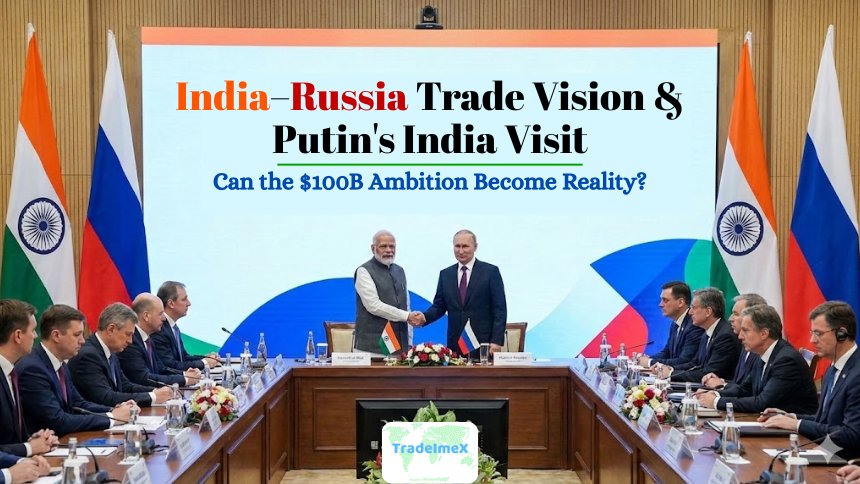
भारत और रूस के बीच लंबे समय से मजबूत रणनीतिक साझेदारी रही है। शुरुआत रक्षा सहयोग से हुई, फिर बदलते वैश्विक हालात के बीच यह संबंध और मजबूत हुए, और अब दोनों देश आर्थिक सहयोग को नई ऊंचाइयों तक ले जाना चाहते हैं। 2025 के अंत में राष्ट्रपति व्लादिमीर पुतिन की भारत यात्रा से पहले एक बड़ा सवाल चर्चा में है:
क्या भारत और रूस वास्तव में 2030 तक द्विपक्षीय व्यापार को 100 अरब डॉलर तक पहुंचा सकते हैं?
व्यापार में तेज़ बढ़ोतरी
2024–25 के आंकड़े बताते हैं कि दोनों देशों के बीच व्यापार में तेज़ वृद्धि हुई है:
- भारत ने 2024 में रूस से 64.23 अरब डॉलर का आयात किया, जो पिछले वर्ष की तुलना में 5% अधिक है।
- रूस को भारत का निर्यात 4.91 अरब डॉलर रहा, जिसमें 2% की बढ़ोतरी हुई।
- कुल द्विपक्षीय व्यापार 2024 में 69.14 अरब डॉलर तक पहुंच गया।
- 2025 की पहली छमाही में ही व्यापार 33.12 अरब डॉलर का रहा।
रूस अब भारत का दूसरा सबसे बड़ा व्यापारिक साझेदार बन चुका है। हालांकि, इस बढ़ोतरी का सबसे बड़ा कारण रूस से सस्ते कच्चे तेल का आयात रहा है। दोनों देश जानते हैं कि केवल तेल पर निर्भर रहकर 100 अरब डॉलर का लक्ष्य हासिल नहीं किया जा सकता।
पुतिन की यात्रा से पहले नई रणनीति
4-5 दिसंबर 2025 को होने वाली पुतिन की भारत यात्रा के दौरान दोनों देश 2030 तक 100 अरब डॉलर के व्यापार लक्ष्य के लिए स्पष्ट रोडमैप तैयार करने की योजना बना रहे हैं।
इसका उद्देश्य है:
- तेल और रक्षा क्षेत्र से आगे व्यापार का विस्तार करना।
- रूस से विमान, मिसाइल सिस्टम और पेट्रोलियम उत्पादों जैसे नए निर्यात बढ़ाना।
- भारत से समुद्री उत्पाद, कृषि वस्तुएं, दवाइयां और मशीनरी का निर्यात बढ़ाना।
- व्यापार असंतुलन कम करना।
- पश्चिमी प्रतिबंधों के कारण प्रभावित आपूर्ति श्रृंखलाओं को मजबूत बनाना।
व्यापार बढ़ा, लेकिन एक बड़ी कमजोरी भी
2022 से पहले भारत-रूस व्यापार 10 अरब डॉलर से भी कम था। अब यह लगभग 69 अरब डॉलर तक पहुंच गया है।
लेकिन समस्या यह है कि:
- भारत का रूस से आयात: 60 अरब डॉलर से अधिक
- भारत का रूस को निर्यात: 5 अरब डॉलर से कम
यानी भारत का व्यापार घाटा लगभग 59 अरब डॉलर है, जो किसी भी देश के साथ उसके सबसे बड़े व्यापार घाटों में से एक है।
तेल ने भारत की ऊर्जा लागत कम करने में मदद की है, लेकिन इससे व्यापार एक ही वस्तु पर अत्यधिक निर्भर भी हो गया है।
100 अरब डॉलर का लक्ष्य अभी क्यों संभव लगता है?
1. रूस को नए आपूर्तिकर्ताओं की जरूरत
यूक्रेन युद्ध के बाद लगे प्रतिबंधों के कारण रूस को नए आपूर्तिकर्ताओं की जरूरत है, जैसे:
- दवाइयां
- मशीनरी
- खाद्य उत्पाद
- इलेक्ट्रॉनिक्स
- रसायन
- औद्योगिक उपकरण
भारत इन सभी क्षेत्रों में रूस की जरूरतों को पूरा कर सकता है।
2. भारत को नए निर्यात बाजार चाहिए
भारतीय उद्योग और दवा कंपनियां नए बाजारों की तलाश में हैं। रूस उन्हें:
- बड़ी मांग
- कम प्रतिस्पर्धा
- मजबूत खरीद क्षमता
जैसे अवसर प्रदान करता है।
3. स्थानीय मुद्रा में व्यापार
रुपया-रूबल भुगतान प्रणाली डॉलर पर निर्भरता कम करती है और वित्तीय प्रतिबंधों के प्रभाव को घटाती है।
4. मजबूत ऊर्जा साझेदारी
भारत को रूस से कच्चा तेल, कोयला, उर्वरक और पेट्रोकेमिकल उत्पादों की जरूरत है, जबकि रूस को बड़े और भरोसेमंद खरीदारों की आवश्यकता है।
5. बड़े निवेश की संभावनाएं
दोनों देश मिलकर इन क्षेत्रों में निवेश बढ़ाने की योजना बना रहे हैं:
- उर्वरक उत्पादन
- शिपिंग कॉरिडोर
- फार्मा निर्माण
- श्रमिक गतिशीलता
- बंदरगाह और लॉजिस्टिक्स
- पेट्रोकेमिकल परियोजनाएं
रूस से भारत क्या आयात करता है?
2024-25 के दौरान भारत के प्रमुख आयात:
- खनिज ईंधन और तेल – 57.17 अरब डॉलर
- पशु और वनस्पति तेल – 2.16 अरब डॉलर
- उर्वरक – 1.67 अरब डॉलर
- कीमती पत्थर और धातुएं – 665 मिलियन डॉलर
- सब्जियां – 460 मिलियन डॉलर
- लोहा और इस्पात – 398 मिलियन डॉलर
- कागज और पेपरबोर्ड – 150 मिलियन डॉलर
- नमक, चूना और सीमेंट – 108 मिलियन डॉलर
- परमाणु रिएक्टर और मशीनरी – 93 मिलियन डॉलर
- अकार्बनिक रसायन – 85 मिलियन डॉलर
भारत रूस को क्या निर्यात करता है?
भारत के प्रमुख निर्यात:
- परमाणु रिएक्टर और मशीनरी – 1.13 अरब डॉलर
- विद्युत मशीनरी और उपकरण – 431 मिलियन डॉलर
- दवा उत्पाद – 419 मिलियन डॉलर
- जैविक रसायन – 367 मिलियन डॉलर
- अकार्बनिक रसायन – 222 मिलियन डॉलर
- अन्य रासायनिक उत्पाद – 166 मिलियन डॉलर
- सिरेमिक उत्पाद – 146 मिलियन डॉलर
- लोहा और इस्पात – 141 मिलियन डॉलर
- चिकित्सा एवं शल्य उपकरण – 131 मिलियन डॉलर
- मछली और समुद्री उत्पाद – 125 मिलियन डॉलर
क्या 100 अरब डॉलर का लक्ष्य वास्तविक है?
हां, लेकिन इसके लिए व्यापार ढांचे में बदलाव जरूरी होगा।
इस लक्ष्य को हासिल करने के लिए भारत और रूस को:
- कच्चे तेल पर निर्भरता कम करनी होगी।
- भारत के निर्यात को तेजी से बढ़ाना होगा।
- संयुक्त परियोजनाओं और निवेश को बढ़ावा देना होगा।
- लॉजिस्टिक्स और शिपिंग नेटवर्क को मजबूत बनाना होगा।
- स्थानीय मुद्रा में व्यापार का विस्तार करना होगा।
- दीर्घकालिक आपूर्ति श्रृंखलाएं विकसित करनी होंगी।
राजनीतिक इच्छाशक्ति, आर्थिक सहयोग की संभावनाएं और वर्तमान वैश्विक परिस्थितियां भारत-रूस आर्थिक संबंधों को एक नए दौर में ले जाने का अवसर प्रदान कर रही हैं। 2030 तक 100 अरब डॉलर का व्यापार लक्ष्य चुनौतीपूर्ण जरूर है, लेकिन सही रणनीति के साथ इसे हासिल किया जा सकता है।